
Neural Therapy, Persistent Migraine, Neck Pain and Fibromyalgia

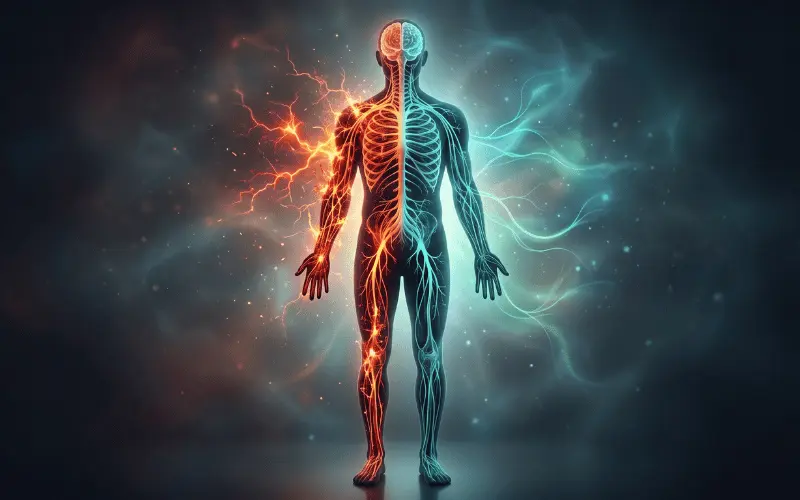
Persistent pain can be disabling even when scans do not show a clear structural cause. Migraine, neck pain and fibromyalgia are distinct conditions, and each needs an appropriate assessment. A normal scan does not mean that pain is imaginary, but it also does not establish a hidden electrical fault.
Neural therapy is an injection approach using local anaesthetics such as procaine or lidocaine. It is sometimes offered as a complementary treatment for pain. Its proposed wider effects on the autonomic nervous system should be distinguished from established pharmacological effects and reliable evidence of clinical benefit.
The autonomic nervous system and pain
The autonomic nervous system helps regulate functions such as heart rate, blood-vessel activity, sweating and digestion. Its sympathetic and parasympathetic components interact with stress responses and pain processing.
Persistent pain is influenced by biological, psychological and social factors. Sleep, stress, activity and previous injury can matter. These interactions do not establish that a person is permanently locked in a fight-or-flight state or that one injection can reset the whole system.
What is meant by an ‘interference field’?
In traditional neural-therapy theory, an old scar or another site is proposed to disturb function elsewhere in the body. This is commonly called an interference field. Such explanations remain hypotheses and should not be presented as established causes of migraine, disc herniation or fibromyalgia.
A painful scar, dental disease or infection may deserve assessment in its own right. However, a well-healed scar or previous root-canal treatment is not proof of the cause of widespread symptoms. Avoid unnecessary dental or surgical procedures based solely on an interference-field theory.
What do local anaesthetics actually do?
Local anaesthetics interfere with nerve impulse conduction, principally by blocking sodium channels. This can temporarily reduce sensation and pain. Descriptions of a cellular ‘reset’, fixed voltage changes or permanent removal of pain memory are not established explanations of a lasting clinical effect.
The injection site and depth matter. Superficial injections, trigger-point procedures and deep nerve or ganglion blocks have different purposes and risk profiles. They should not be grouped together as if they were a single uniformly safe treatment.
Migraine and persistent headache
Migraine is a neurological disorder that can include nausea, sensitivity to light and sound, and sometimes aura. Neck discomfort may accompany it. A headache diary can help document frequency, associated symptoms and medicine use.
Established care includes suitable acute and preventive treatments, with a review for medication-overuse headache where relevant. Neural therapy should not replace this assessment or be promised to cure migraine by treating a scar. Botulinum toxin for chronic migraine has specific selection criteria and is a separate treatment.
Neck pain and muscle symptoms
Neck pain can arise from muscles, joints, nerves and other causes. The relationship between imaging findings and symptoms is imperfect. Examination, movement assessment and a review of neurological symptoms help guide care.
Education, activity modification and progressive exercise often form part of the plan. An injection may be discussed for a specific indication, but a lack of major findings on MRI does not automatically justify it.
Fibromyalgia and pain sensitivity
Fibromyalgia can involve widespread pain, fatigue, unrefreshing sleep and difficulty concentrating. Altered pain processing is relevant, and symptoms are real. It should not be reduced to a single scar, dietary ingredient or electrical blockage.
Management commonly combines individually paced physical activity, support for sleep and coping, and medicines when appropriate. No single treatment works for every symptom. Neural therapy is not an established stand-alone cure, and improvement should be assessed using everyday function as well as pain.
What does the research show?
Clinical studies have investigated neural therapy in some pain conditions, including chronic lower back pain. A favourable result in one study does not prove benefit for migraine, fibromyalgia or every chronic illness. Differences in methods, comparison groups and follow-up limit broad conclusions.
Ask what evidence applies to your diagnosis, how the proposed treatment compares with standard care and when it will be stopped if it does not help. Combining it with PRP, prolotherapy or cell-based products does not establish an additional benefit.
Neural therapy and vagus nerve stimulation
Electrical vagus nerve stimulation and other neuromodulation devices are separate interventions with their own evidence and indications. Findings about a specific device cannot be used to prove that local anaesthetic injections produce the same effect.
Assessment and safety
Discuss medicines, allergies, pregnancy or breastfeeding, bleeding disorders and heart or neurological conditions before any injection. Risks include pain, bleeding, infection, allergic reactions, nerve injury and local anaesthetic toxicity. Deep injections can have additional site-specific risks. ‘Low dose’ does not mean risk-free.
Do not stop prescribed treatment independently. Sudden severe headache, new weakness, speech difficulty, confusion or headache with fever and neck stiffness warrants urgent medical assessment.
Frequently asked questions
Does it contain cortisone?
Neural therapy commonly uses a local anaesthetic, rather than a corticosteroid. Ask for the exact ingredients and purpose.
Is it painful?
Needle discomfort and temporary soreness can occur. The experience depends on the site and technique.
Can one injection permanently cure the problem?
That outcome cannot be promised. A short-term response does not prove a proposed interference-field mechanism.
Can it replace fibromyalgia care?
No. A comprehensive, evidence-informed plan remains important.
Further information: neural therapy, rehabilitation and assessment enquiries.
Further reading: Clinical trial of neural therapy for chronic lower back pain; NHS fibromyalgia treatment information.
Publisher: Dr Serap Erkeç Alkan Clinic. This article provides general information and does not replace an individual diagnosis or treatment plan. Treatment decisions require a clinical assessment.

