
Health and Rehabilitation Blog
Patient information on pain, movement and rehabilitation.
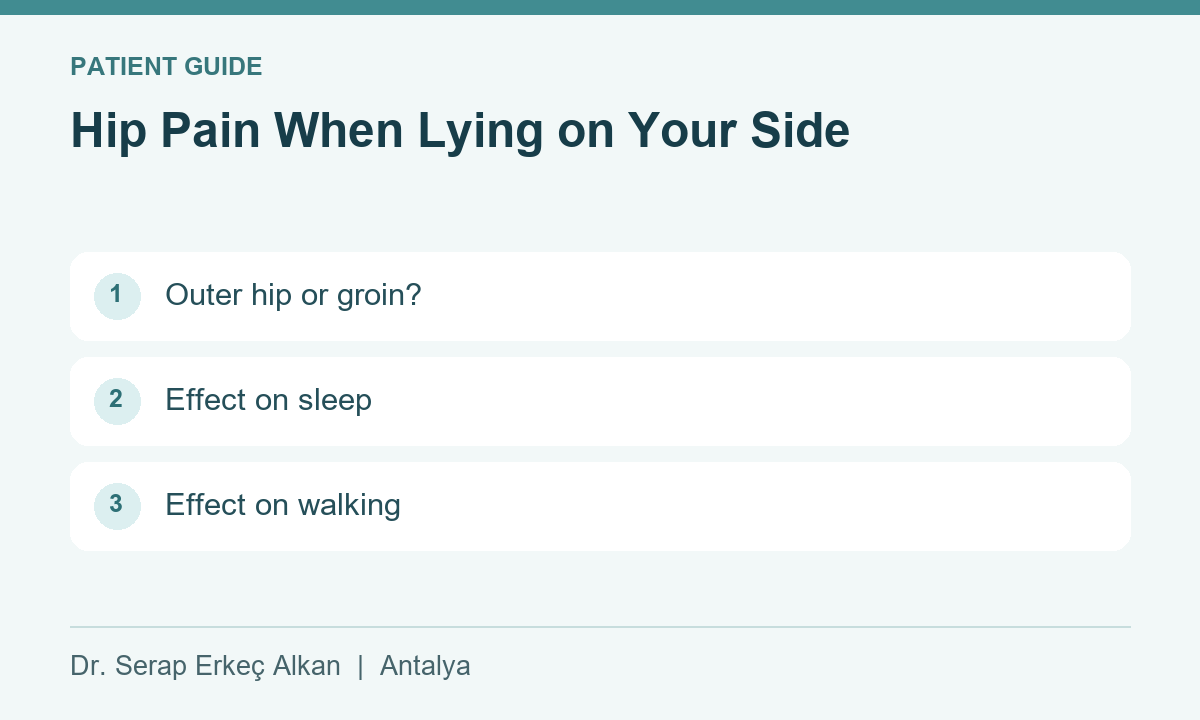
Hip Pain When Lying on Your Side: What to Track

Track the location of hip pain, its effects on sleep and walking, and warning signs before an individual assessment in Antalya.
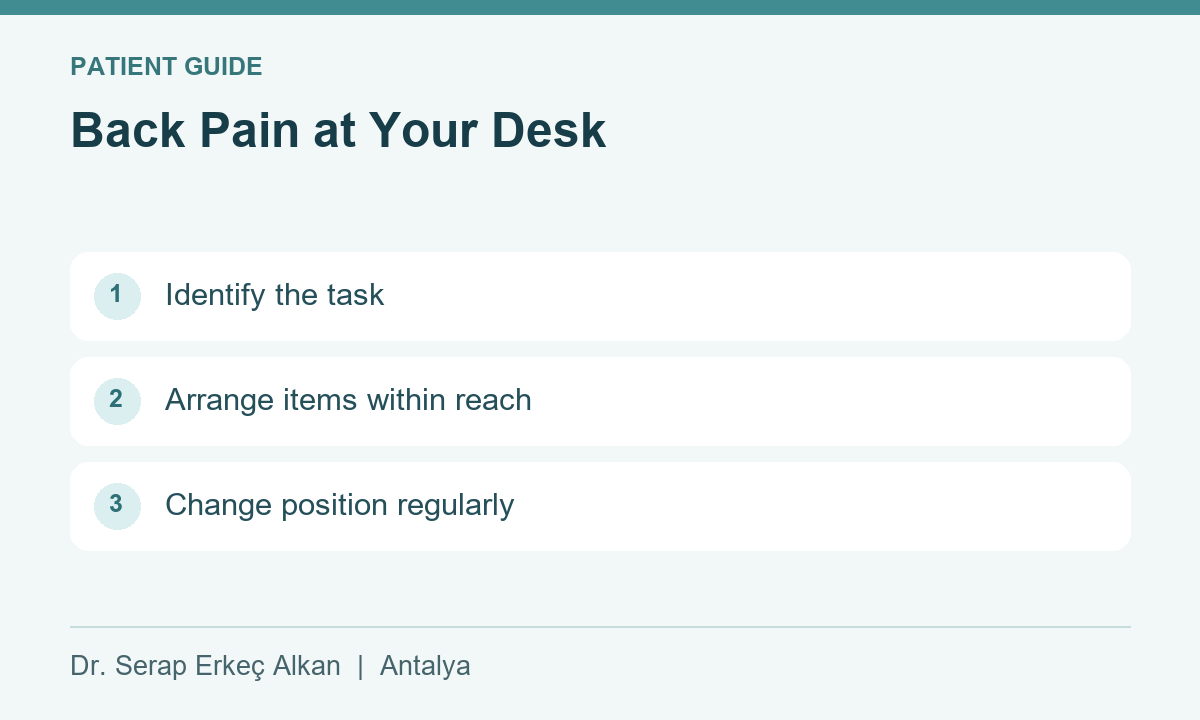
Back Pain at a Desk: A Practical Workstation Checklist
Review desk tasks, equipment access and movement breaks before buying new furniture, and learn when persistent back pain needs assessment.
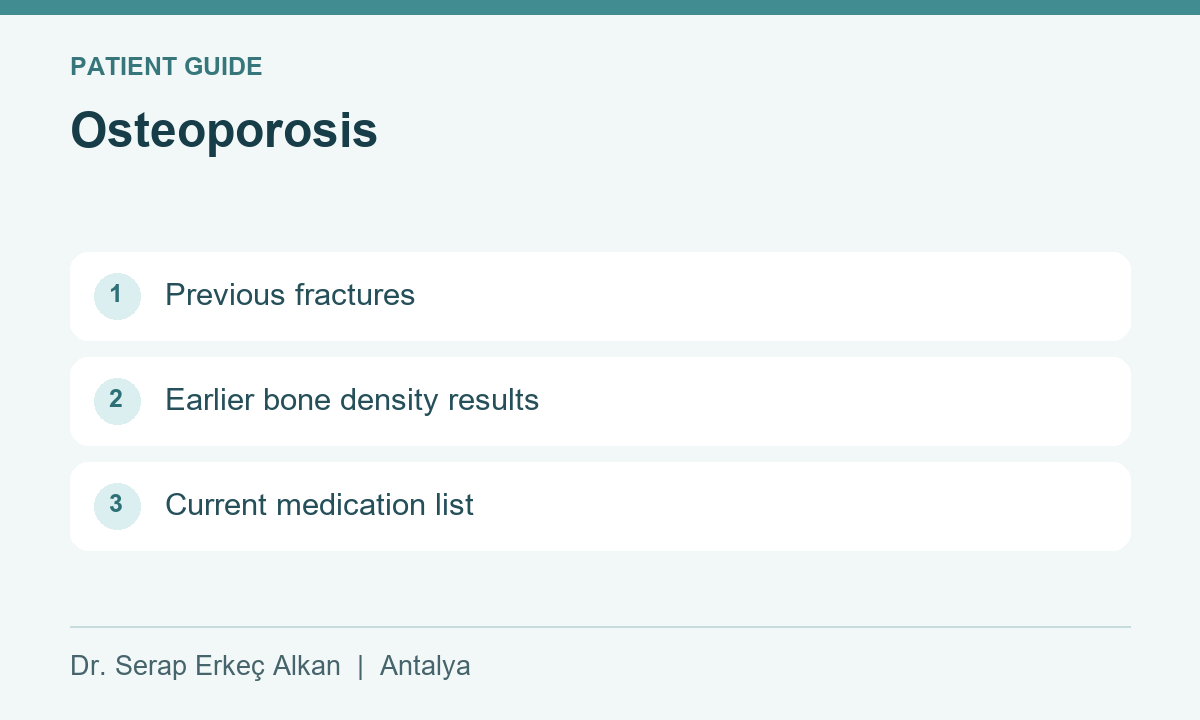
Osteoporosis: Preparing for a Bone Density Assessment
Understand osteoporosis, osteopenia and bone density reports, and prepare the records and questions needed for an assessment in Antalya.
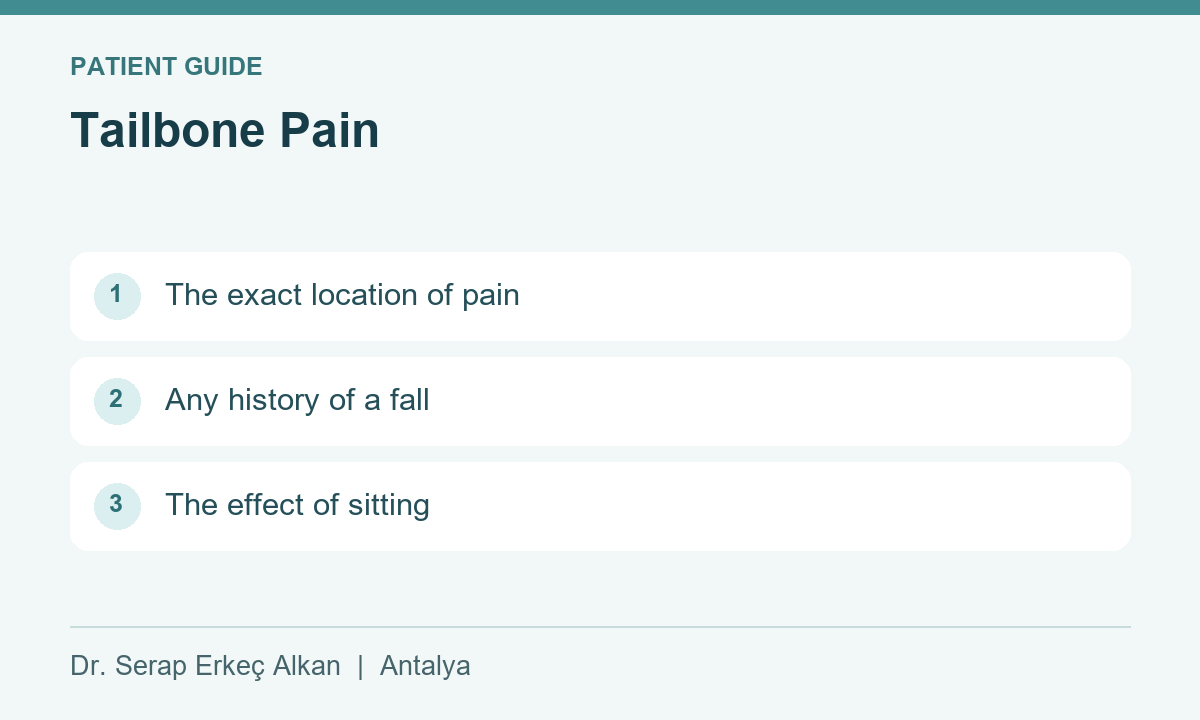
Tailbone Pain: Sitting, Travel and Preparing for Assessment
Learn how to describe tailbone pain, review sitting arrangements, plan travel and recognise symptoms needing prompt medical assessment.
Frozen Shoulder: Difficulty Dressing and Restricted Movement
Practical information on frozen shoulder, recording daily difficulties, individual exercise advice and preparing for an appointment in Antalya.
Hand Numbness at Night: What to Track Before Your Appointment
Learn what to record about night-time hand numbness, changes in grip and possible carpal tunnel symptoms before an assessment in Antalya.

Knee Osteoarthritis: Early Symptoms and Treatment Options
Recognise common knee osteoarthritis symptoms and explore assessment, exercise, medicines, injections and when joint replacement may be considered.
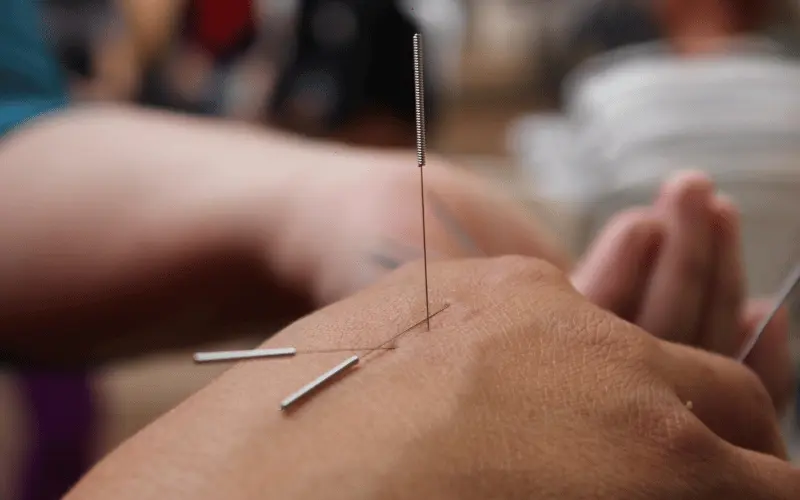
Dry Needling for Myofascial Pain: Benefits, Limits and What to Expect
Understand dry needling for painful muscle trigger points, including the procedure, evidence, side effects and how it fits into rehabilitation.
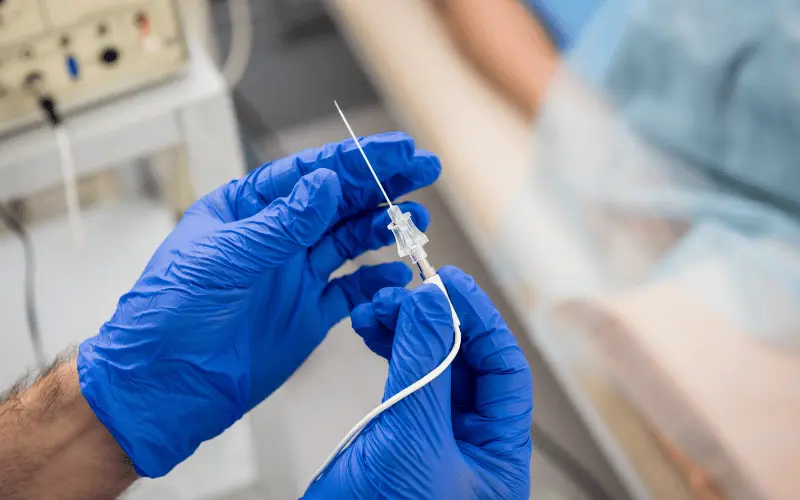
Radiofrequency Ablation: Expectations, Risks and Follow-Up Questions
Learn what radiofrequency ablation aims to achieve, why diagnostic blocks may be used and which preparation, risk and follow-up questions to ask.

Joint Pain in Winter and Rheumatoid Arthritis: A Patient Guide
Understand winter joint symptoms, the difference between rheumatoid arthritis and osteoarthritis, warning signs and the importance of early treatment.

