
Back Pain at a Desk: A Practical Workstation Checklist

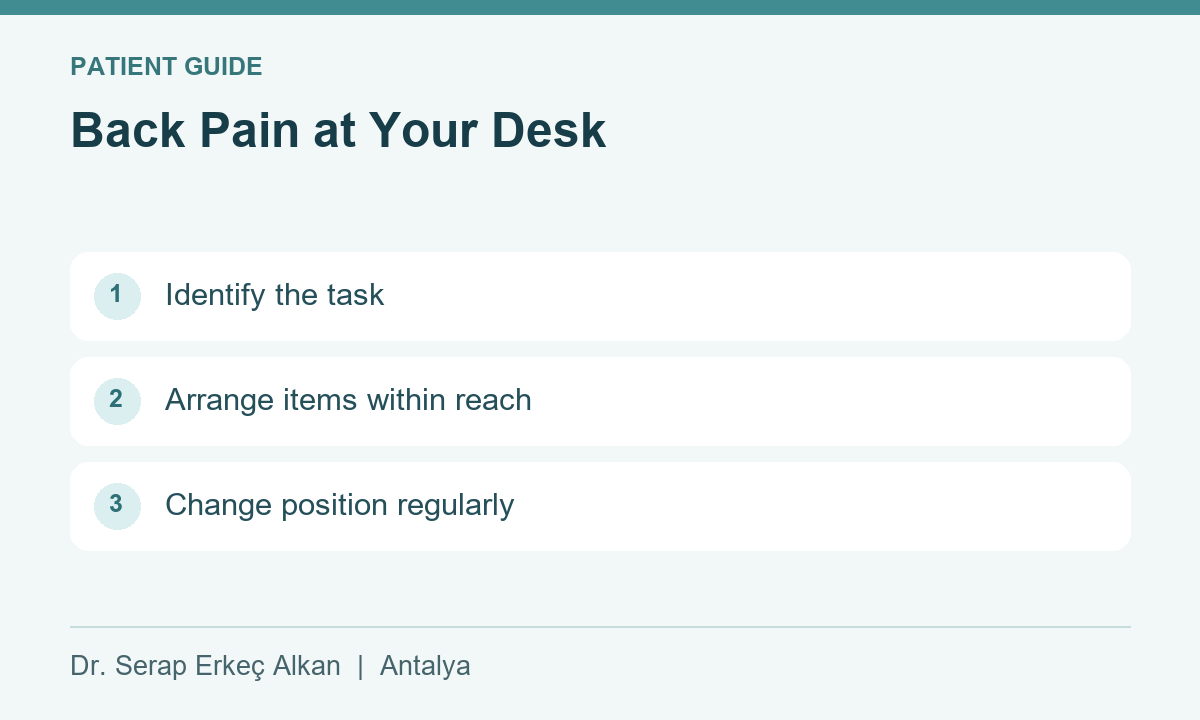
Desk-related back pain cannot always be explained by a single ‘bad posture’. Time in one position, workload and associated symptoms all matter. This guide helps people working in offices or at home in Antalya review their working arrangements before buying expensive equipment.
Identify where and when pain occurs
Pain between the shoulder blades, stiffness at the end of the day and pain spreading into a leg are different descriptions. For a few days, note the task that triggers symptoms, how long they last and their effect on work. This record does not diagnose the cause, but provides clear examples for an assessment.
Assess your workstation around the task
Identify your main activity: reading a screen, writing documents, telephone calls or drawing. Check whether the items needed are easy to reach. If you repeatedly lean forward to read, review text size and screen position. Adjust the chair to your body. Aim for a comfortable setup that allows position changes rather than searching for one perfect posture.
Link breaks to your workflow
Use transitions between tasks as opportunities to move: after a meeting, when finishing a file or between telephone calls. Where practical, stand up or change location briefly. A fixed number of minutes or repetitions is not appropriate for everyone. Do not continue a movement that increases pain simply because a schedule says to do it.
Before buying new equipment
Describe the specific problem before choosing a support, desk or chair. Replacing equipment without knowing which adjustment is missing may create unnecessary expense. Change one setting and compare how you feel during a similar task. Equipment does not replace assessment of persistent symptoms.
When should you seek assessment?
Seek assessment if pain persists for several weeks, limits daily activities or is particularly troublesome at night. Mention fever, unexplained weight loss or rapid worsening. Chest pain, pain after a serious accident, weakness in both legs or new bladder or bowel control changes requires emergency help. Prolonged bed rest is not a general solution; movement advice should reflect your circumstances.
Preparing for an appointment from Burdur or nearby areas
Make a short list describing a typical working day. If bringing workstation photographs, exclude personal documents and other people’s information. Specific examples of difficult tasks are more helpful than the chair’s brand. Bring previous reports and a medication list.
Frequently asked questions
Will an orthopaedic chair definitely resolve pain?
No. A product alone is neither a diagnosis nor a treatment plan.
Is all back pain caused by a slipped disc?
No. Symptoms and examination findings need to be assessed together.
See our lumbar disc information and contact details.
Publisher: Dr Serap Erkeç Alkan Clinic. This article provides general information and does not replace an individual diagnosis or treatment plan. Treatment decisions require a clinical assessment.

