
Shoulder Tears: Causes, Diagnosis and Treatment Options in Antalya

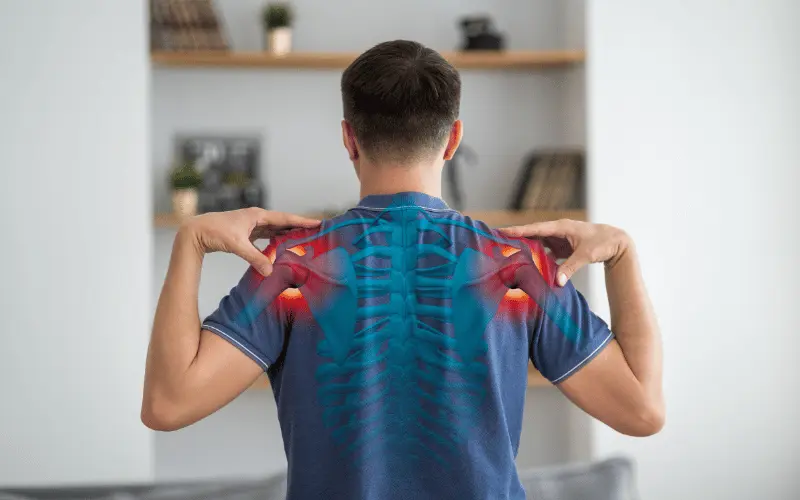
Shoulder pain can affect overhead work, sport, dressing and sleep. A tear may involve a rotator cuff tendon or the labrum, but these are different structures with different treatment needs. Assessment should identify the problem and its effect on daily life before a procedure is selected.
How the shoulder works
The shoulder combines the upper-arm bone, shoulder blade and collarbone. The main glenohumeral joint is a ball-and-socket joint; the acromioclavicular and sternoclavicular joints and movement of the shoulder blade against the chest also contribute to reaching.
The labrum is a fibrocartilaginous rim around the socket. The capsule and ligaments help provide stability, while bursae reduce friction between tissues. A labral tear is not the same as a rotator cuff tear.
The rotator cuff and shoulder-blade muscles
The supraspinatus, infraspinatus, teres minor and subscapularis muscles and tendons contribute to shoulder movement and control of the humeral head. Muscles including trapezius and serratus anterior help position the shoulder blade. Coordinated movement is important, but an altered movement pattern alone does not prove that a tear is present.
Types of shoulder tears
Rotator cuff tears
Tendon changes may develop gradually with ageing and loading, or follow trauma such as a fall or sudden pull. A partial-thickness tear affects part of the tendon depth and may involve its bursal or joint surface. A full-thickness tear extends through the tendon. Larger or multiple-tendon tears may involve retraction and muscle changes.
The size, location, duration and associated weakness help guide decisions. Imaging terminology should be explained in relation to symptoms rather than treated as a diagnosis of disability by itself.
Labral tears
A SLAP lesion affects the upper labrum near the attachment of the long head of the biceps. A Bankart lesion involves the front-lower labrum and can occur with anterior shoulder dislocation. Instability, catching and pain need to be assessed in their clinical context.
Work and sport in Antalya
Greenhouse work may involve repeated overhead reaching; hospitality work can involve lifting, carrying and repetitive tasks. Swimming and other overhead sports place different demands on the shoulder. These activities are relevant to assessment, but do not prove a particular injury. Describe changes in workload, technique and symptoms.
Clinical assessment
History and function
Explain when pain began, whether there was an injury, the location, night symptoms and which movements are difficult. Front, outer or posterior shoulder pain can have overlapping causes. Pain when raising the arm or lying on the shoulder does not establish a tear on its own.
Examination
The clinician may assess active and passive movement, strength, stability and the neck. Tests such as Neer, Hawkins–Kennedy, Jobe, drop-arm, O’Brien and apprehension tests explore different possibilities. No single test is definitive, and painful tests should not be repeatedly attempted at home.
Imaging
- X-rays show bone and joint features, including arthritis or the consequences of injury.
- Ultrasound can assess rotator cuff tendons dynamically and guide selected procedures.
- MRI provides information about tendons, muscles and other soft tissues.
- MR arthrography may be used for selected questions, including some labral injuries.
The choice depends on examination and the clinical question. Not every patient needs every investigation.
Non-surgical treatment
Not every tear requires surgery. Symptoms and function may improve with appropriate non-surgical care even when a structural tear remains. Conversely, significant traumatic tears or instability may need early surgical assessment. The plan should account for age, activity, strength, tear characteristics and goals.
PRP
PRP is a platelet-rich preparation made from blood. Platelets contain substances involved in tissue responses, but a biological rationale does not guarantee tendon-to-bone healing. Ask which diagnosis is being treated, what clinical research applies and how benefits and risks compare with alternatives.
Prolotherapy
Prolotherapy usually involves dextrose-containing injections. Proposed inflammatory and collagen responses should not be presented as proof that a tear will close or an unstable shoulder will become stable. Evidence and suitability need to be discussed for the specific condition.
Cell-based approaches
Preparations derived from bone marrow or fat vary considerably. Their use should not be assumed to regenerate a torn tendon or replace established care. Ask about the exact product, evidence, risks and authorisation. See stem cell-based treatment information.
Other pain-management approaches
Neural therapy uses local anaesthetic injections within proposed regulatory approaches. ‘Interference field’ explanations involving scars are not proof of the cause of shoulder pain.
Dry needling may address selected muscle-related symptoms. It does not repair a torn tendon and is not free of adverse effects. Radiofrequency treatment aims to reduce selected pain signals; it also does not repair the tear.
Physiotherapy and rehabilitation
A programme may use appropriate movement practice, progressive rotator cuff and shoulder-blade strengthening, and task-specific training. Manual techniques or symptom-relief modalities can be considered where useful, but should have a clear purpose. An injection does not replace the work of restoring function.
Early protection
Restrictions depend on the injury and whether surgery was performed. Follow the surgeon’s instructions after repair. The same sling period, injection or passive exercise programme is not suitable for every tear.
Restoring movement
Assisted and active movement are introduced according to healing, symptoms and the agreed protocol. Exercises using a stick, pulley or pool may be appropriate for some patients but should not be started simply from a generic timetable.
Strength and control
Resistance bands, light weights and supported exercises may be introduced progressively. The goal is useful movement and capacity, not simply completing a fixed number of weeks.
Return to work and sport
Later practice reflects the demands of reaching, lifting, swimming or throwing. Strength, movement control and workload tolerance guide progression. See orthopaedic rehabilitation and sports rehabilitation.
When might surgery be considered?
Reasons for surgical review can include a traumatic full-thickness tear with important weakness, recurrent dislocation, substantial functional loss or persistent symptoms despite suitable care. Some cases need earlier review rather than waiting through a fixed rehabilitation course.
Arthroscopic procedures may repair tendons or the labrum where indicated. The operation and postoperative restrictions depend on the pathology. Rehabilitation is an important part of recovery, but neither surgery nor rehabilitation guarantees a particular outcome.
Frequently asked questions
Can a shoulder tear heal completely without surgery?
Structural healing and improvement in pain or movement are different outcomes. The likely benefit depends on the tear and the individual.
Is PRP painful?
Pain can occur during or after injection. Pain alone does not prove tissue healing. Report increasing redness, swelling, fever or new weakness.
How long should physiotherapy continue?
Duration depends on assessment, goals and response. There is no fixed session number for everyone.
Are corticosteroid injections harmful?
Benefits and risks depend on the diagnosis, site, dose, frequency and medical circumstances. Decisions should not rely on one universal annual limit or an unconditional claim that another injection is better.
For further information, see shoulder conditions and contact Dr. Serap Erkeç Alkan’s clinic.
Publisher: Dr Serap Erkeç Alkan Clinic. This article provides general information and does not replace an individual diagnosis or treatment plan. Treatment decisions require a clinical assessment.

