
Tennis Elbow: Symptoms, Assessment and Treatment in Antalya

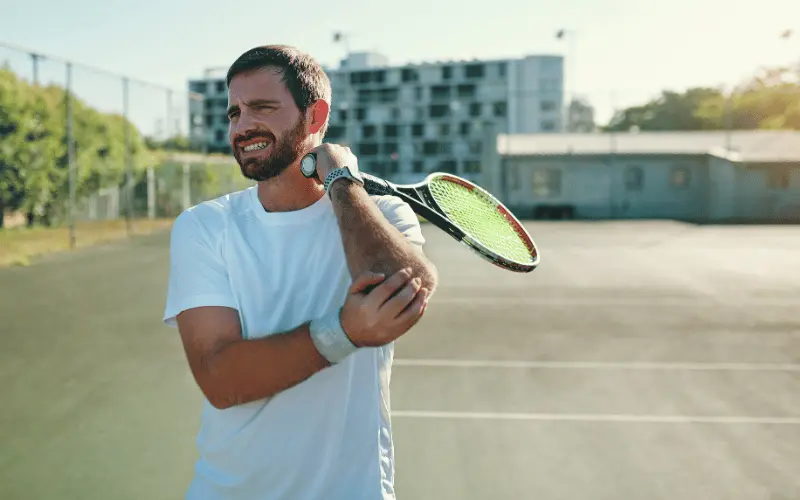
Tennis elbow can make gripping, lifting and ordinary household tasks painful. Despite its name, it often affects people who do not play tennis. Understanding the activities that provoke symptoms and gradually rebuilding tolerance are important parts of care.
What is tennis elbow?
Tennis elbow, also called lateral epicondylitis or lateral elbow tendinopathy, involves the tendons attached near the bony prominence on the outside of the elbow. These tendons help the wrist and fingers work during gripping and lifting.
The extensor carpi radialis brevis tendon is commonly involved. Persistent tendon problems can include changes in tissue organisation and load tolerance. The term ‘tendinitis’ does not fully describe every case, but this does not mean that an injection labelled regenerative is automatically required.
Common symptoms
- Pain or tenderness on the outside of the elbow.
- Discomfort when gripping, lifting a cup, turning a handle or using tools.
- Pain with resisted wrist movement.
- A feeling of reduced grip strength because of pain.
Symptoms often develop gradually. Their duration does not reliably identify a particular cellular stage, and not everyone follows the same recovery pattern.
What can contribute?
Repetitive or unfamiliar gripping and wrist activity can overload the area. Work tasks, gardening, DIY and racket sports may be relevant. Changes in training volume, equipment or technique can also matter.
A practical review may include how a load is held, the amount of repetition, rest breaks and strength across the upper limb. No single posture explains every case.
Other causes of elbow pain
Pain on the inside of the elbow may relate to medial tendinopathy, often called golfer’s elbow. Tingling in the ring and little fingers can suggest ulnar nerve involvement. Swelling over the back of the elbow may involve the olecranon bursa.
Joint disorders, neck-related pain and injury can also produce symptoms. Examination usually guides the diagnosis; imaging is used when indicated rather than being mandatory for everyone. See elbow conditions.
Why can recovery take time?
Tendons adapt to load gradually. Continuing the same aggravating activity, or avoiding all activity for a long period, can make progress difficult. Recovery is not explained solely by poor blood supply or a failure of the body to heal.
A tailored programme balances temporary changes to painful tasks with progressive strengthening. The aim is to improve capacity for the activities that matter to you.
Non-surgical treatment options
Activity adjustment and exercise
Reducing or modifying provocative loads can help while strength is rebuilt. Exercises may include different forms of resisted wrist and forearm work, progressed according to response. Eccentric exercise is one approach, not the only useful one.
Supports and pain management
A forearm strap or wrist support may help some people during tasks. Appropriate pain relief can be discussed with a clinician or pharmacist, taking other medicines and health conditions into account.
Injections and other procedures
Corticosteroid injections can offer short-term relief in some cases, but longer-term outcomes and recurrence concerns should be discussed. PRP, prolotherapy and needling techniques have been studied with varying results. They should not be promised to rebuild the tendon or guarantee a permanent cure.
Every injection has risks, including pain, bleeding and infection. Ask what additional benefit is expected compared with rehabilitation and what will happen if it does not help. Related information: PRP, prolotherapy and dry needling.
Returning to work and sport
Progress should be based on grip tolerance, strength and the demands of the activity. Shoulder and upper-limb conditioning may be relevant alongside forearm exercises. A return plan reduces abrupt jumps in load, but no programme can guarantee that symptoms never recur.
See orthopaedic rehabilitation and sports rehabilitation.
When is further assessment needed?
Seek review for persistent or worsening symptoms, significant loss of function, numbness or weakness. Severe pain after an injury, deformity or a hot swollen joint with fever needs prompt medical assessment. Surgery is considered only in selected persistent cases after appropriate evaluation.
Frequently asked questions
Can I have tennis elbow without playing tennis?
Yes. Many everyday and occupational activities load these tendons.
Will it improve without surgery?
Many people improve with non-surgical care, but the course and recovery time vary.
Does PRP have a fixed recovery timetable?
No. Benefit is uncertain for an individual, and a temporary pain flare is not proof of repair.
Is a brace enough?
It may make tasks more comfortable, but should be considered alongside load management and rehabilitation.
For an individual assessment, contact Dr Serap Erkeç Alkan’s clinic in Antalya.
Publisher: Dr Serap Erkeç Alkan Clinic. This article provides general information and does not replace an individual diagnosis or treatment plan. Treatment decisions require a clinical assessment.

