
Cervical Disc Herniation: Assessment and Rehabilitation in Antalya

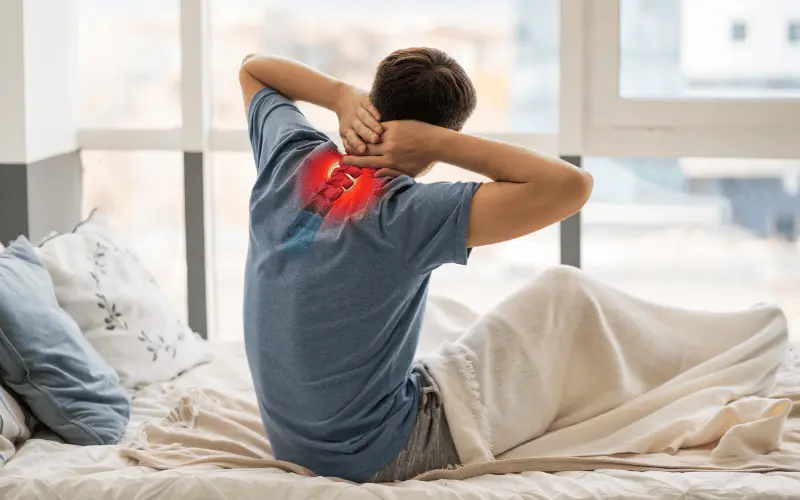
Cervical disc herniation can cause neck pain and symptoms extending into an arm. In some cases, spinal cord involvement requires particular attention. Understanding the examination and the purpose of each treatment helps patients in Antalya make informed choices.
Understanding the cervical spine
The neck contains seven vertebrae, labelled C1 to C7. Intervertebral discs, where present, contribute to movement and load distribution. Each disc has a fibrous outer ring and a softer centre. Disc material extending beyond its normal position can irritate a nerve through pressure and inflammation.
Symptoms can vary with the affected nerve. For example, C5 involvement may affect shoulder movement; C6 may involve the thumb and elbow flexion; C7 may involve the middle finger and elbow extension; and C8 may affect hand function and the little-finger region. These patterns overlap and cannot establish the diagnosis without assessment.
Contributing factors
Disc changes can involve ageing, inherited factors, previous injury and other influences. Degenerative changes are often described as cervical spondylosis. A scan finding does not necessarily explain every symptom.
Screens and sustained positions
Long periods looking down at a phone or working in one position can aggravate symptoms for some people. A single posture or calculated load figure does not prove that a disc herniation has developed. Review task duration, screen position and opportunities to move.
Air conditioning and comfort
In Antalya’s hot weather, a comfortable work and sleep environment can be helpful. Do not assume that air conditioning caused a herniation or explains persistent symptoms. Ongoing or worsening neck complaints need assessment.
How is the problem assessed?
- History and examination: onset, pain distribution, numbness, weakness and daily limitations are reviewed. The clinician may assess strength, sensation, reflexes and movement.
- Imaging: MRI can show discs and other soft tissues; CT may be useful for particular bony questions. Not everyone needs the same investigation.
- Nerve testing: EMG or nerve conduction studies may help in selected cases, including when another nerve problem is possible.
- Function: sleep, work, hand use and mobility help define treatment goals.
Progressive weakness, increasing hand clumsiness, new balance or walking problems, or bladder or bowel changes should be reported promptly. The clinician will determine the urgency and need for specialist referral.
Non-surgical care
Treatment depends on symptoms and examination findings. It may involve education, suitable activity, exercise, medicines and selected additional interventions. Surgical assessment is appropriate in some circumstances; no fixed recovery percentage applies to everyone.
Physical therapy modalities
Heat or cold, TENS and other modalities may be considered for symptom relief. Their use should have a clear purpose and be reviewed against benefit. Traction is not suitable for every patient and should not be attempted without assessment and guidance.
Manual techniques
Mobilisation and soft-tissue techniques may be used alongside exercise where appropriate. The technique and risks should be explained, particularly for procedures around the neck. Manual treatment does not physically guarantee that a disc returns to its previous position.
Dry needling
Dry needling may be considered for selected muscle-related pain. The absence of an injected medicine does not mean absence of adverse effects. Ask about bruising, bleeding, infection and site-specific risks.
Complementary and injection approaches
Each proposed intervention needs its own rationale. Combining several methods does not automatically produce faster or longer-lasting recovery.
- Neural therapy uses local anaesthetic injections. Evidence and risk should be discussed for the particular diagnosis.
- Prolotherapy commonly uses dextrose-containing injections. It cannot be assumed to correct spinal instability or stop disc progression.
- PRP concentrates platelets from blood. Biological activity is not proof of disc regeneration in patients.
- Mesotherapy involves superficial injections. Discuss the substance, intended symptom and evidence rather than treating it as a direct disc repair.
Radiofrequency procedures
Radiofrequency techniques may be discussed for selected persistent pain conditions. The target and method depend on the suspected source; facet pain and nerve-root pain are different. The procedure does not remove a herniated disc. Ask about diagnostic blocks, risks, alternatives and follow-up.
Rehabilitation matched to your needs
Rehabilitation may address movement, strength and confidence after pain or surgery. Neurological deficits require appropriate medical assessment and may change the plan. Sports programmes add the demands of training and competition when relevant.
Cerebral palsy and traumatic spinal cord injury require their own specialist rehabilitation pathways. Their mention in rehabilitation services should not be taken to mean that they are routine consequences or treatments of a cervical disc herniation.
Exercise and home care
A clinician may select controlled strengthening, movement exercises and gentle stretching according to assessment. Isometric exercises, neck retraction and shoulder or neck stretches are examples, not a universal prescription. Ask for the correct technique, amount and progression for you.
Stop and seek advice if an exercise produces sharp pain, increasing arm symptoms or weakness. A home programme should support daily function without repeatedly provoking symptoms. See our cervical disc information.
Choosing and planning care in Antalya
Look for relevant qualifications, an individual assessment, clear explanations and coordination between clinicians where needed. Testimonials cannot predict your result. Ask how the plan relates to your work, activity and other conditions and how progress will be reviewed.
The clinic is at Bahçelievler Mah. Konyaaltı Cad. Murat Apt. No:44 İç Kapı No:1, Muratpaşa / Antalya. Emerging cell-based or robotic approaches are areas of research and development, not a guarantee of better care for every neck problem. See about Dr. Serap Erkeç Alkan and appointment information.
Publisher: Dr Serap Erkeç Alkan Clinic. This article provides general information and does not replace an individual diagnosis or treatment plan. Treatment decisions require a clinical assessment.

